
Digital transformation and artificial intelligence (AI) are increasingly shaping education, labor markets, service delivery, and integration processes across Europe. Migrant and refugee organizations play a crucial role in supporting communities with migration backgrounds; however, many of these organizations face challenges related to limited digital literacy, restricted access to innovative tools, and insufficient capacity to integrate AI into their educational and organizational work.
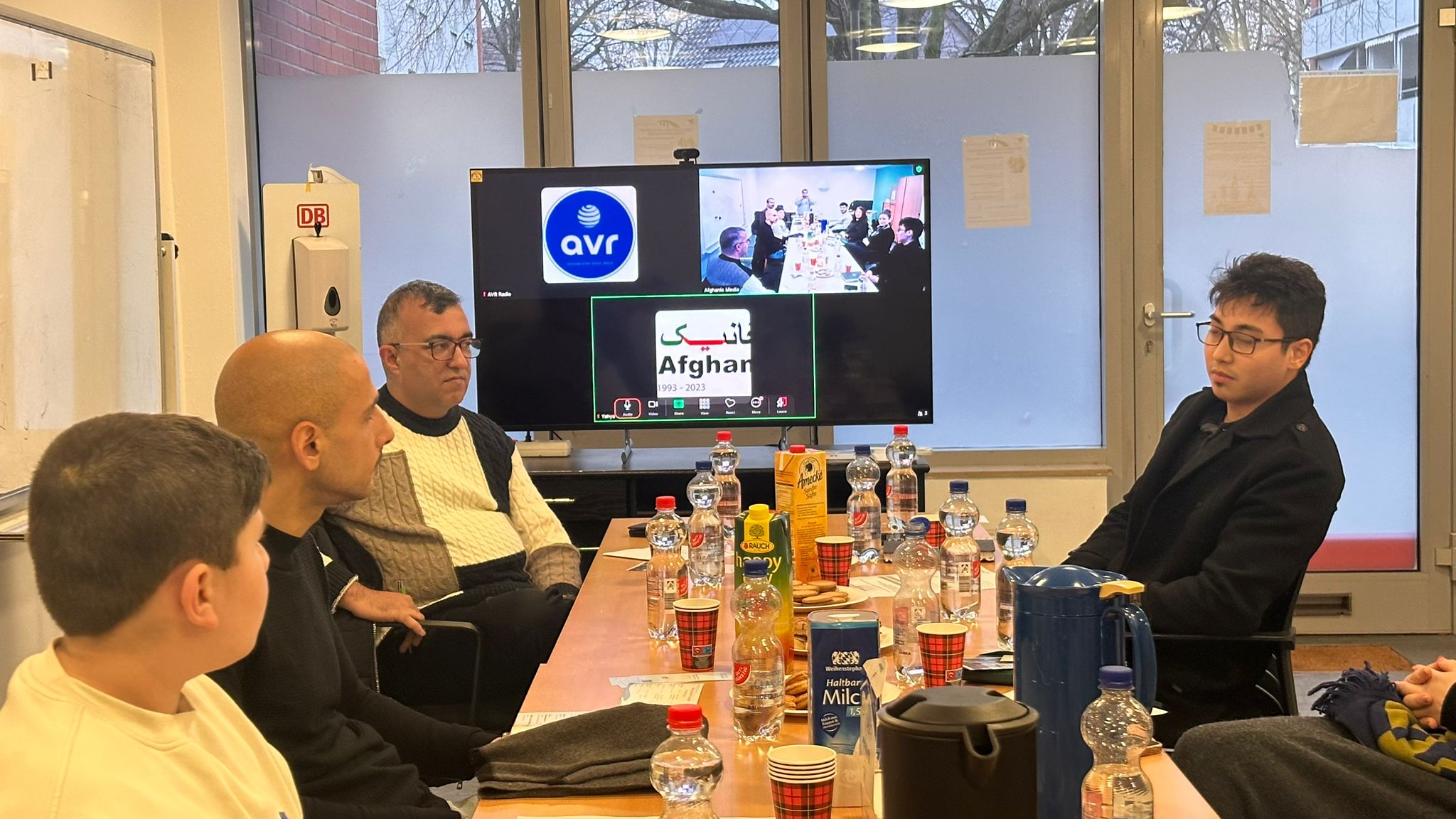
In this context, Afghanic e.V. organized the workshop “AI for Migrant Organizations” to introduce key AI concepts, share good practices, and promote peer learning among migrant-led organizations. The event was part of the broader project implementation period running from 01.01.2025 to 31.12.2025.
Objectives of the Workshop
The main objectives of the workshop were to:
- Raise awareness about the relevance and potential of artificial intelligence for migrant and refugee organizations
- Present concrete project results from an EU-funded Erasmus+ initiative
- Strengthen the capacity of migrant organizations to use AI in education, communication, and service provision
- Encourage critical reflection on the ethical use, reliability, and limitations of AI-generated content
- Facilitate exchange of experiences and collective problem-solving among participants
Target Groups
The primary target group of the workshop consisted of:
- Representatives, staff, and volunteers of migrant- and refugee-led organizations
- Organizations supporting Afghan refugees and other migrants in Europe
Special attention was given to groups facing:
- Language and cultural barriers
- Limited access to the labor market
- Low digital literacy
The workshop emphasized how AI-powered and personalized learning tools can contribute to improved integration outcomes, skills development, and employment opportunities.
Workshop Agenda and Key Contributions
Welcome and Opening Remarks
The workshop began with a welcome speech by Mr. Imamudin Hamdard, organizer of the event. In his opening remarks, he highlighted:
- The growing importance of artificial intelligence for civil society and migrant organizations
- The need for responsible, inclusive, and ethical use of AI
- The role of migrant organizations as bridges between technology, education, and community needs
He emphasized that AI should be seen as a supportive tool, not a replacement for human judgment, cultural understanding, and community engagement.
Presentation of Erasmus+ Project Results
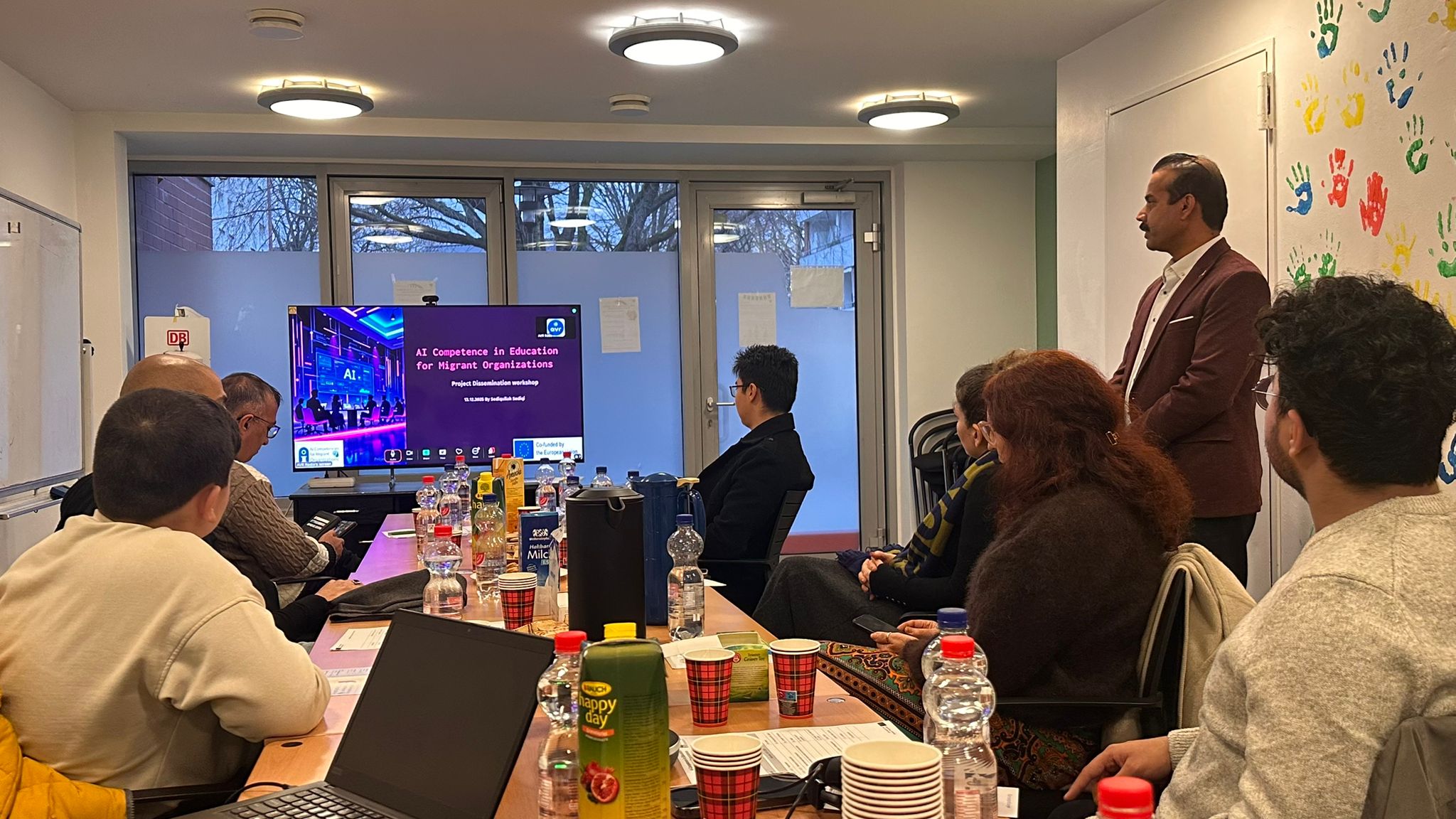
Following the opening, Mr. Sediq Sediqi, Project Coordinator of Afghanic e.V., presented the outcomes of the project:
“AI Competence in Education for Migrant Organizations”, funded by the European Union’s Erasmus+ Programme.
The project was implemented as a joint initiative between:
- Afghanic e.V. (Germany)
- Afghan Tips (Belgium)
- Bizlinks Consulting and Marketing (Turkey)
- advisa WIRTSCHAFTSAKADEMIE e.V. (Germany)
Mr. Sediqi explained that the initiative focuses on empowering migrant organizations through the integration of artificial intelligence in adult education. Key results presented included:
- Development of AI-related learning resources tailored for migrant organizations
- Capacity-building activities for staff and volunteers
- Tools and approaches for integrating AI into educational programs
Additional Project Inputs
Ms. Cornelia presented three core components of the Erasmus+ project, explaining their structure, methodology, and relevance for migrant organizations.
Mr. Bashir introduced the project website, highlighting:
- Available digital resources
- Learning materials and tools
- Opportunities for organizations to engage further with the project outputs
AI, Trust, and Ethical Considerations
Ms. Sarah Struck delivered an input session on:
- The importance of AI in education and organizational work
- Critical questions around trustworthiness, bias, and reliability of AI-generated content
She encouraged participants to adopt a balanced approach by:
- Verifying AI outputs
- Understanding data limitations
- Combining AI tools with human expertise and ethical standards
Interactive Group Work
An interactive group work session was facilitated by Mr. Zahed Zahedi, who guided participants in discussing and responding to the following key questions:
- How can we equip refugee organizations with artificial intelligence?
- In which areas can we use artificial intelligence?
- What can immigrants learn from the manufacturing industry in Germany?
- How useful is the information on refugees provided with the help of artificial intelligence?
Participants worked collaboratively, sharing practical experiences, challenges, and ideas. The discussions highlighted the need for:
- Training and digital literacy programs
- Context-sensitive AI applications
- Strong data protection and ethical safeguards
AI in language technologies
Mr. Jandad Jahan presented the findings of the group work, with a special focus on Common Voice initiatives and the use of AI in language technologies. He emphasized:
- The importance of preserving and promoting mother tongues, particularly Pashtu
- The need to use AI to support multilingualism rather than replace original languages
- Encouraging families and communities to help children maintain and learn their native languages alongside host-country languages
This contribution highlighted the cultural dimension of AI and its potential role in linguistic inclusion and identity preservation.
Outcomes and Key Takeaways
The workshop achieved the following outcomes:
- Increased awareness among migrant organizations about AI opportunities and limitations
- Strengthened understanding of AI applications in adult education and integration work
- Enhanced networking and cooperation among refugee- and migrant-led organizations
- Encouraged critical thinking on ethics, trust, and cultural sensitivity in AI use
Participants expressed strong interest in follow-up activities, further training, and practical tools tailored to their organizational contexts. Afghanic e.V. and its partners reaffirmed their commitment to promoting inclusive, ethical, and community-centered digital innovation for migrant and refugee communities.